








How to make talking head films that stand out.
The talking head video is one of the oldest formats in film, and still one of the most powerful. Strip away the graphics, the music, the b-roll, and you’re left with the thing that actually moves people: a person, talking.
It’s the format behind most interview videos, thought leadership films, testimonial videos, and case study films — and it’s deceptively hard to get right. So what separates a talking head film that lands from one that gets scrolled past?
What Is a Talking Head Video?
A talking head video (sometimes called a talking head film or talking head interview) is a piece of video content built around a single person speaking directly to camera or to an interviewer. It’s typically used for testimonials, case studies, expert interviews, internal comms, and brand storytelling. The format lives or dies on a handful of details: planning, location, lighting, composition, eyeline, sound, and, above everything else, how comfortable the person on camera actually feels.
The Planning
Great talking head videos are won or lost before anyone picks up a camera.
At Chocolate Films, every project starts with a proper discovery conversation. We want to understand your contributor’s key messages, identify the stories worth telling, and get clear on what the interview video actually needs to achieve. That groundwork makes everything else easier.
Preparation isn’t about handing contributors a script. It’s about helping them arrive ready to speak naturally. A well-prepared contributor speaks with purpose, and that’s what turns a stiff testimonial video into one people actually believe.
The Location
Where you film tells its own story. Sometimes it’s best to shoot a talking head interview in an environment that actually reflects the contributor’s work such as a workshop, a gallery, a busy open-plan office. This instantly adds credibility and visual texture without saying a word. Other films are better served by a strong branded background, or a neutral space that keeps focus entirely on the content.
Our crew are experienced at reading a location quickly, finding the angles and backgrounds that most people would walk straight past. Whether we’re filming on location at your premises or at our studio in Nine Elms, Battersea, the choice of where to place someone for a talking head film is always deliberate. It’s never just whatever’s convenient.
The Lighting
Good lighting is the difference between a talking head video that feels professional and one that feels like a video call. Our crew work with high-quality LED lighting rigs that give us consistency and control in any environment, from a sun-drenched atrium to a basement meeting room with no natural light.
The Composition
How you frame a person tells the audience how seriously to take them. Our crews think carefully about headroom, eye line height, depth of field, and what’s happening in the background, making decisions that support the subject rather than fight for attention with them.
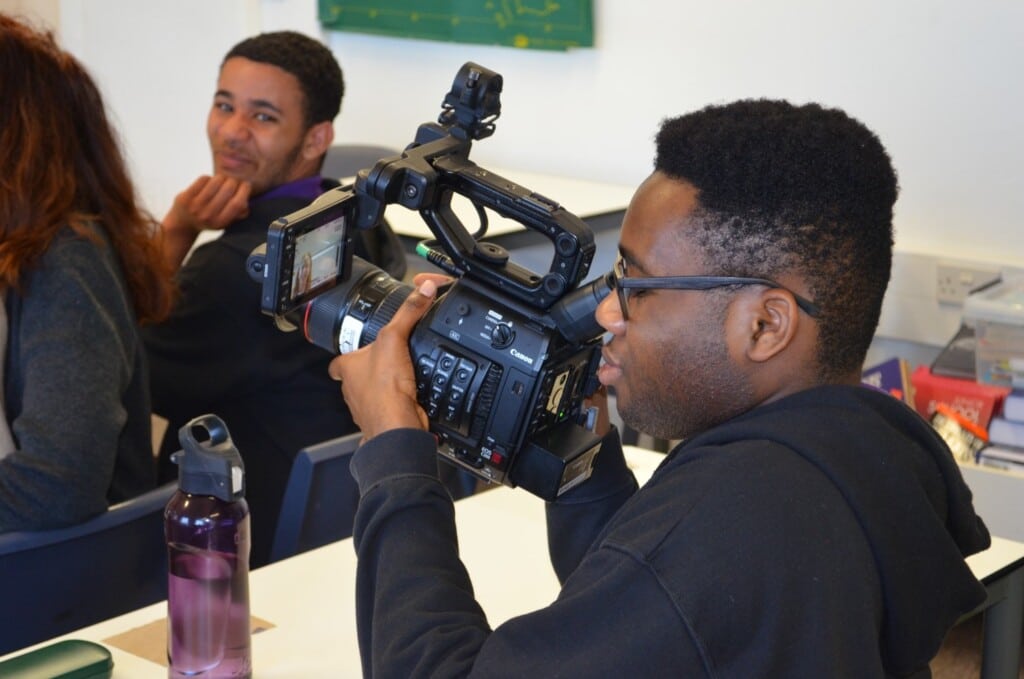
We shoot on high-end cinema cameras with great lenses, which gives us beautiful background separation and an image quality that holds up on any screen. A well-chosen frame within a frame, a softly blurred background, a small shift in angle: these things seem subtle, but in a talking head interview they change how a person comes across completely.
The Eyeline
Where your contributor looks on camera matters more than most people realise. Often, finding the right off-camera eye line creates the feeling of a real conversation rather than a formal statement. Other interview videos are better served by the contributor looking down the lens, making direct eye contact with the viewer.
Our directors work carefully with contributors on eyeline, especially those who haven’t filmed before. It often only takes a small adjustment, but it can transform a talking head video from stiff and awkward to warm and natural.
The Sound
Poor audio will kill a talking head film faster than almost anything else. Viewers will forgive a slightly imperfect image far more readily than they’ll put up with sound that’s tinny, echoey, or inconsistent.
Our crew use professional radio microphone systems and dedicated audio recorders, and we always manage the acoustic environment carefully before we start shooting. For the organisations we work with most (charities, galleries, museums, public sector bodies, healthcare providers, schools and universities) the people on camera are often talking about things that genuinely matter to them. Making sure those words are heard clearly is the bare minimum we owe them.
But Mostly, the People
All of the above counts for very little if your contributor isn’t comfortable. A nervous subject, a crew that rushes the setup, a director who doesn’t take time to build rapport: it all shows on screen, however good the lighting is.
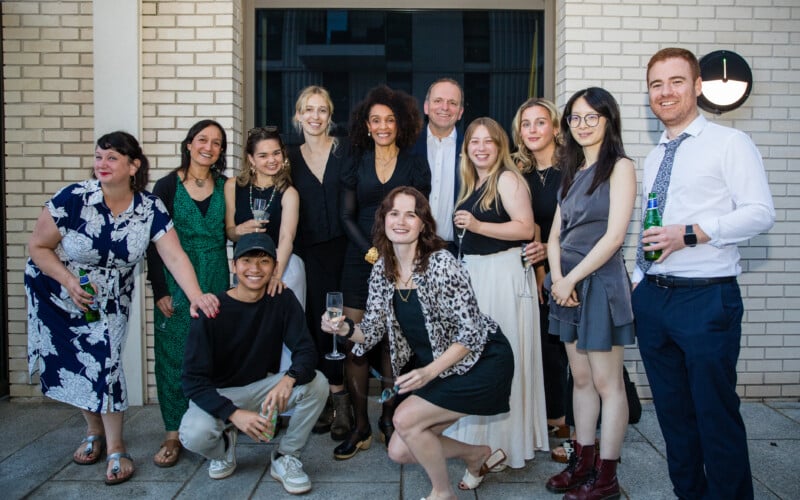
This is where we think the Chocolate Films difference really shows up in every interview video and testimonial video we make. Our crew are kind. They’re patient. They’re genuinely good with people, and that’s not something we take for granted. Whether someone has appeared on camera hundreds of times or has never done it once and is quietly dreading the whole thing, they get the same warm, unhurried welcome. There’s no pressure, no sense that anyone is wasting the crew’s time, and no such thing as a stupid question.
We take time before the camera rolls. We listen. We try to create the kind of environment where someone can say something real rather than something they feel they’re supposed to say. When people feel properly looked after, something relaxes in them, and you can see it in the footage.
That’s the thing that can’t be written into a kit list or a shot list. It’s just how we work, and it’s what we care about most on every talking head film we make.
FAQs
How long should a talking head video be? Most land somewhere between 60 seconds and 3 minutes for web and social use, though longer-form interview videos (5 minutes plus) work well for in-depth case studies or internal communications.
Do I need a script for a talking head interview? No, and we’d actively steer you away from one. A short list of key messages and a proper discovery conversation beforehand gets a much more natural result than a memorised script ever will.
What makes a testimonial video believable? Comfort, mostly. A relaxed, well-prepared contributor in good light with clear audio will always read as more credible than a nervous one reciting perfect lines.
Thinking about a talking head video for your organisation? Get in touch and tell us about your project.